
Starting up a business requires many decisions as you build it up. One of those decisions is whether to create a website and most crucially, what it should deliver to your business.
Many businesses elect not to create a website citing effort, cost, value derived from it. They are doing ok to transact on Facebook, TikTok, YouTube etc, and see no need for a website. Others go all out and create huge websites with masses of information.
Whatever your views, informed decisions drive better business so it’s good to consider your options.
There are 3 main types of websites 1) lead funnel to your product 2) a Business Card and 3) a reference site. Under these there are multiple sub-types such as media, blogs, educational, streaming, crowdfunding, e-commerce, communities etc.
Let’s look at the 3 main headings:
- Lead funnel – here you are using your website to funnel sales of your product. This could be an e-commerce site selling soap, food, apparel, spare parts etc. It can be a multi-product site such as Amazon, Lazada, Etsy or Alibaba. It can also be a site that sells services or software such as Microsoft, Infosys, KPMG, Hilton Hotels, airlines.
- Business Card – this is a more static website presenting your team, products etc. People go check out your website but essentially do no business via the site. This could be a specialist or niche product, or service. Your customers come from a different funnel but seek out your website to validate that you are a legitimate business.
- Reference sit – this is Wikipedia, a knowledge store, a local community or focus group, a sports group, a chess, or bridge club. It can be open like Wikipedia or a closed membership-based site where you log in to access information.
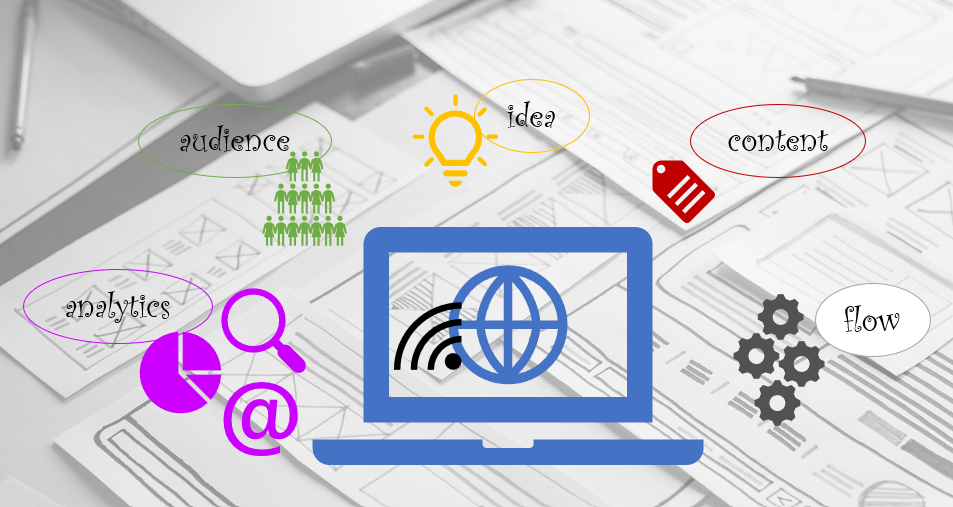
Before you sit down to design your website you need to have a long and deep conversation with yourself to set some clear objectives on what you want to get out of your website. Only then should you define the approach, content, and create your customer’s journey on your website.
If you are building a lead funnel then your approach is to have a dynamic site with frequent updates, 600+ words per page, fully SEO styled. You need to actively market the site on Google and on social media, maybe even on mainstream news sites. You should capture email addresses by offering newsletters, product updates etc.
If you are selling your product online via the site, you will need dynamic pages and payment gateways that function seamlessly for the ultimate customer experience. You must make it easy for your customer to use your website. Their positive experience provides you with repeat business, referrals and 4 – 5 star service ratings.
If you are building the website as your Business Card, then you need to define the message you want to present to the world. You need a landing page to create the overall impression of what your business does, a couple of pages with additional information on your expertise, perhaps a blog or a page with white papers and a contact page/section. The objective is for people who have heard of or met you to validate that you are a legitimate business. The site needs to be maintained and updated from time to time.
If you are building a community site, then you need to have frequent updates to stay relevant to your audience. Manage events, insights, discussion forums etc. creating membership value to keep them engaged. You might have member-to-member offers and discounts or group relevant offers from 3rd parties. This can be paid or unpaid marketing as befitting your group. Your website should have landing page with information on the group and links to sign up. Then behind the login pages and data that are dynamic and provide a great member experience.
As you work through your ideas and views check out other websites related to your business segment to see what you like and don’t like. Maybe even sign up as a member or leave your email to see what kind of updates they offer.
When you have defined your direction then the hard work starts on finding the right people or company to help you bring your website to life. You also need to have plans in place on how to maintain the website and appoint someone to manage it all for you – that is unless you are a solopreneur, in which case I would still outsource it to someone on a part time basis to maximise the use of your time on things only you can do.
 LAN Business Consulting