
Great Customer Experience builds loyalty
Today people want to experience things, it’s not enough to own a cool car or get a cool haircut. You can buy or get either of those anywhere, so business owners need to differentiate themselves by creating exiting, pleasing, and interesting ‘customer journeys’ that brings them back to their business again and again.
Customers want to feel loved and appreciated. They will return to the shop, bar, restaurant, hotel etc. that welcomes them, provides a unique experience, and listens to their specific needs.
As a business owner you need to spend time listening to your customers and review their reactions to you, your product, and your staff. Social media being what it is, we all know how a series of bad reviews can take their toll on any business.
The customer journey really does begin at HELLO, whether that is at your shop door, FB page, website, phone call, email etc. It’s all about how customers feel during and after interacting with your products, employees, channels, and systems.
According to Forrester research:
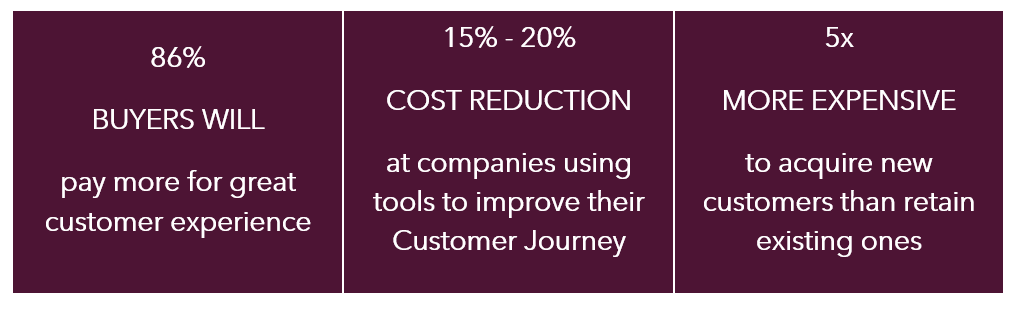
Let’s look at how you can create a winning customer experience for your business.
First some basic principles:
- People prefer simplicity over complexity
- People love choice — but not too much
- People only remember an experience based on its peak and its endpoint
- People prefer relevant, personalized messages
- People are scared to try new things — unless everyone else is doing it too
Everything people do is based on emotions. Even if they think they are taking a process approach to a decision. In the end the decision on using your product or visiting your shop, website is based on experiences they have had with you.
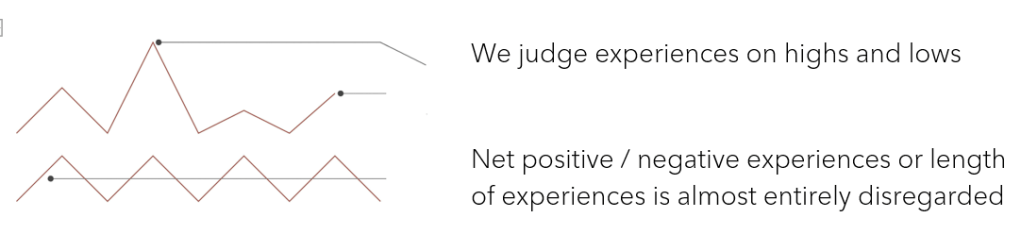
*Jenifer Clinehens Behavioural Science and Psychology
As you can see from the figure above you need to provide highs for customers. If a low happens then the experience is all about how you solve the problem for them. If that fix is inclusive and makes the customer feel valued, you have turned a low to a high.
The next step is to map out your customers. Where do they come from, age group, interests, how do they consume your product, how do they obtain it etc. Then you need to take a walk in their shoes. To understand you need to experience the same journey they take to buy/consume your product.
You need to map out all the steps it takes to do this. For example, if you have a restaurant then walk through your customers arrival at the door. How are they greeted, does someone seat them, what happens at that stage, list and evaluate all steps from HELLO to when they leave the premises waving goodbye.
Having listed all the steps, you now need to evaluate how you specifically want each step to go for your customer. You should also spend some time observing how your customers experience your service/product today. Then compare that with what you expect. Finally create a detailed SOP based on this and train all staff to follow it.
Some final points on best practice when building your Customer Experience
- Customer First – actually putting yourself in their shoes
- Empathy for your Customer – adopt an ‘outside-in’ approach
- Efficiency – solving your customers problems and needs
- Continuity – don’t disappoint, meet, and exceed expectations
- A holistic approach – build with intention, considering your customers touchpoints and tasks
- Agile – with flexibility be planful and purposeful for as far down the pike as you can see.”

 LAN Business Consulting